
Introduction
Starting a low investment business is a smart choice for people who want to earn money without taking big financial risks. Many beginners believe that starting a business requires huge capital, offices, and staff. In reality, this is not always true. Today, technology, digital platforms, and changing customer habits have made it easier than ever to start small and grow steadily. A low investment business allows you to test your ideas, learn skills, and earn income without putting your savings in danger.
This type of business is perfect for students, job holders, freelancers, and even homemakers. You can start part-time, learn from mistakes, and slowly expand when you feel confident. Because the investment is low, the pressure is also low. This helps you focus on learning, improving, and serving customers better.
Another reason why low investment business models are popular is flexibility. You can work from home, choose your own hours, and scale at your own pace. Many successful entrepreneurs today started with small ideas and limited budgets. What made them successful was consistency, planning, and smart decision-making.
In this guide, you will learn what a low investment business really is, why it matters, and how you can start one step by step. You will also explore benefits, risks, common mistakes, FAQs, and expert tips. If you are serious about starting something of your own with minimum risk, this article is for you.
What is Low Investment Business?
A low investment business is a type of business that requires minimal startup capital. Instead of spending large amounts on rent, machines, or inventory, you focus on skills, time, and smart tools. These businesses usually rely on digital platforms, services, or small-scale products.
For example, freelancing, online tutoring, home-based food services, and reselling products are common low investment business ideas. Most of these businesses can be started with basic tools like a smartphone, internet connection, or simple equipment.
The main goal of a low investment business is to reduce financial risk while creating income opportunities. You invest small, learn fast, and grow slowly. This approach is ideal for beginners who want to understand business basics without pressure.
Why is Low Investment Business Important?
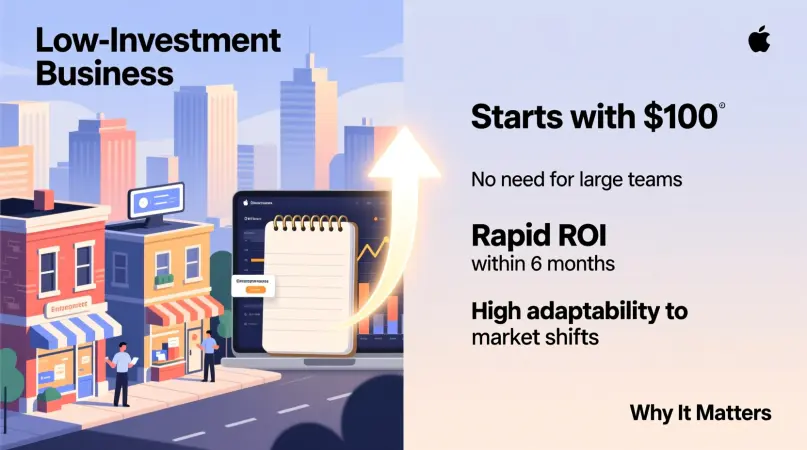
Low investment business models are important because they make entrepreneurship accessible to everyone. You do not need to be rich to start. Anyone with dedication and planning can begin.
They also encourage innovation. When resources are limited, people think creatively. This often leads to unique ideas and better solutions. In addition, low investment business options support economic growth by creating self-employment and reducing job dependency.
Another key benefit is risk control. Since the investment is small, failure does not cause major financial damage. This makes it easier to try again with a better plan. For beginners and intermediate learners, this learning experience is extremely valuable.
Detailed Step-by-Step Guide
Step 1: Identify Your Skills and Interests
Start by listing your skills, hobbies, and experiences. A low investment business works best when it is based on what you already know.
Ask yourself:
- What am I good at?
- What do people often ask me for help with?
- What problems can I solve?
For example, if you are good at writing, you can start content services. If you enjoy cooking, a home-based food business may work.
Step 2: Research the Market
Market research helps you understand demand and competition. Look for problems people face and how they are solving them.
You can:
- Observe social media trends
- Read customer reviews
- Talk to potential customers
This step helps you refine your idea and avoid wasting time and money.
Step 3: Choose the Right Business Model
Select a business model that matches your budget and lifestyle. Common low investment business models include:
- Service-based businesses
- Online selling and reselling
- Digital products
- Consulting or coaching
Service-based models are often best for beginners because they require little or no inventory.
Step 4: Plan Your Budget Carefully
Even a low investment business needs planning. Write down all possible costs, such as tools, marketing, and basic operations.
Keep your budget realistic and always save a small emergency amount. Avoid unnecessary spending in the beginning.
Step 5: Set Up Basic Operations
Set up simple systems for communication, payments, and delivery. You do not need perfection. Focus on functionality.
Use free or low-cost tools to manage tasks, track orders, and communicate with customers. This keeps your operations smooth and professional.
Step 6: Promote Smartly
Marketing does not have to be expensive. Use organic methods such as social media, referrals, and word of mouth.
Share valuable content, show your work, and engage with your audience. Consistency is more important than spending money.
Step 7: Start Small and Improve
Launch with a small audience. Collect feedback and improve your service or product.
A low investment business grows through learning and adjustments. Do not rush expansion. Focus on quality and customer satisfaction.
Benefits of Low Investment Business
- Requires minimal startup capital
- Lower financial risk
- Easy to start and manage
- Flexible working hours
- Suitable for beginners
- Opportunity to learn business skills
- Can be started part-time
- Easy to scale with experience
Disadvantages / Risks
- Limited initial income
- Slow growth in the beginning
- High competition in some areas
- Requires self-discipline
- Income may be unstable
- Learning curve for beginners
Common Mistakes to Avoid
Many beginners fail not because the idea is bad, but because of avoidable mistakes. One common mistake is trying to do everything at once. Focus on one idea and do it well.
Another mistake is ignoring market research. Without understanding customer needs, even a low investment business can fail. Also, avoid underpricing your services. Low price does not always mean more customers.
Poor time management is another issue. Treat your business seriously, even if it is part-time. Finally, do not quit too early. Results take time, especially in small business ideas.
FAQs
What is the best low investment business for beginners?
The best option depends on your skills. Service-based businesses like freelancing, tutoring, or consulting are often ideal because they require low capital and offer quick learning.
How much money is needed to start a low investment business?
It can start from very small amounts. Some startup with low capital ideas require only basic tools and internet access. Budget depends on the business type.
Can a low investment business become profitable?
Yes, many profitable business ideas started small. With consistency, learning, and smart planning, profits can grow over time.
Is a low investment business safe?
It is safer than high-capital businesses because financial risk is low. However, effort and patience are still required.
How long does it take to see results?
Results vary. Some see income within weeks, while others take months. Growth depends on demand, effort, and strategy.
Can I run a low investment business with a job?
Yes, many people start part-time. This reduces risk and allows you to learn without pressure.
Expert Tips & Bonus Points
Focus on building trust, not just sales. Customers return when they feel valued. Keep learning new skills related to your business.
Track your progress weekly. Small improvements lead to big results. Always reinvest a portion of your earnings to improve quality.
Networking also helps. Connect with people in similar fields and learn from their experiences. Lastly, stay patient. Every successful low investment business takes time to grow.
Conclusion
A low investment business is one of the best ways to enter the world of entrepreneurship without fear. It allows you to start small, learn continuously, and grow at your own pace. Instead of waiting for perfect conditions, you can begin with what you have today. Skills, time, and commitment matter more than money in the early stages.
Throughout this guide, you learned what a low investment business is, why it is important, and how to start step by step. You also explored benefits, risks, common mistakes, and expert advice. These insights are designed to help beginners and intermediate learners make informed decisions.
Remember, success does not happen overnight. Small efforts repeated daily create long-term results. Choose an idea that matches your interests, research your market, and stay consistent. Even if you face challenges, the experience will teach you valuable lessons.
If you are serious about financial independence and personal growth, starting a low investment business can be a powerful first step. Take action, stay focused, and believe in your ability to build something meaningful with limited resources.